A simple family check-in routine
A short check-in at a regular time, in similar light, can become a calm habit for the whole family.
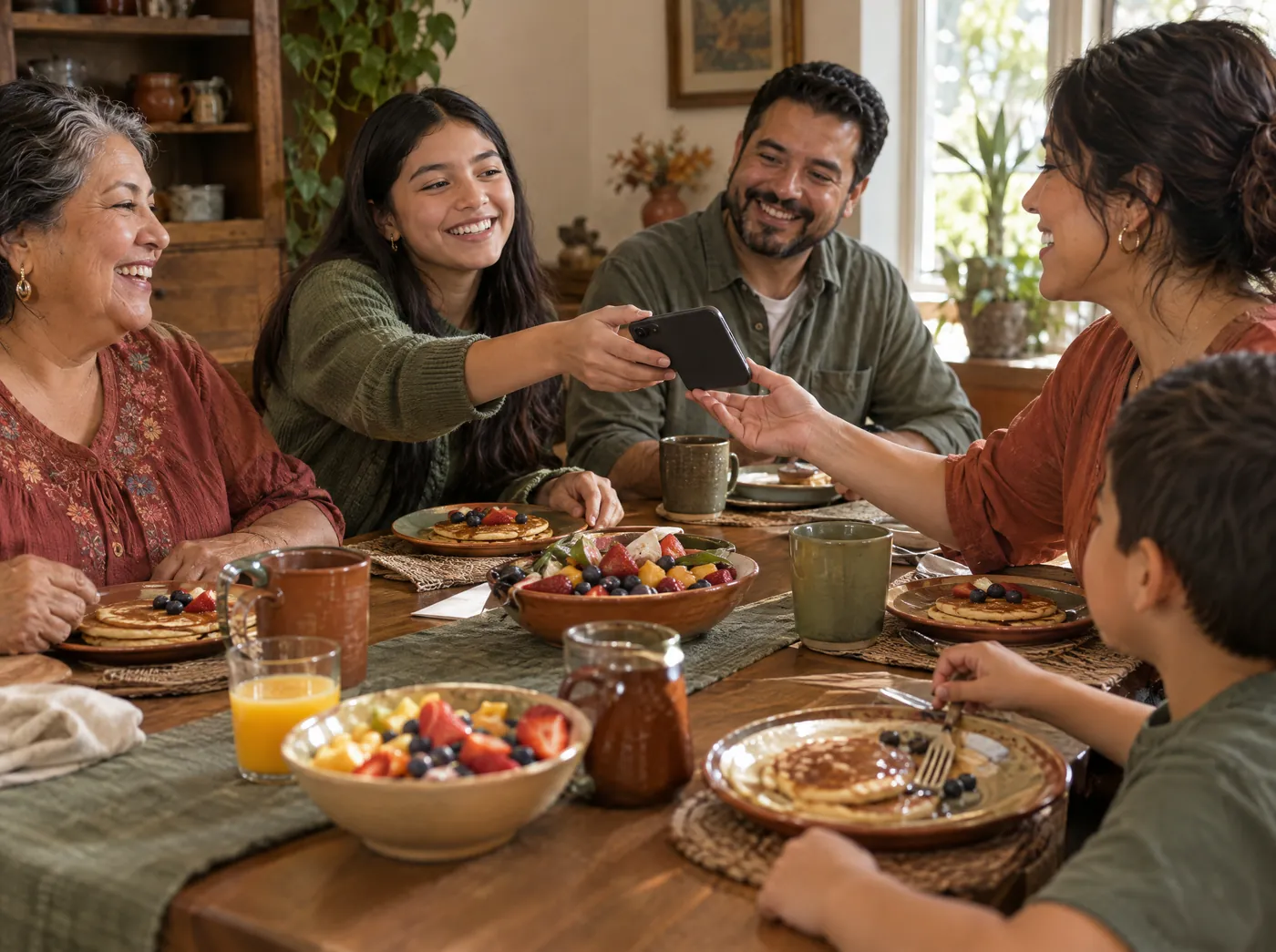
Wellness check-ins work best as a habit, not a test. A small routine, repeated on a regular schedule, makes results easier to compare and keeps the mood light. Here is one way to set it up.
Pick a regular time
Choose a moment that already works for your family, like a weekend morning before breakfast, and keep it. Scanning at the same time of day, before coffee or a workout, means each person is scanned under similar conditions. That makes changes easier to read.
Use the same spot and similar light
Find a place with soft, even light on the face, like a chair facing a window, and avoid sitting with a bright window or lamp behind you. Using the same spot each time keeps the light similar from one check-in to the next. Our five tips for a good scan cover the details.
Plan the month’s scans
The Family plan includes 8 scans a month, shared by you, one spouse or partner (18 or older) and up to 3 children. Other relatives, like grandparents, are not part of the plan. The 8 shared scans don’t cover a weekly scan for everyone: two adults who each scan every week would use all 8 in about four weeks. A little planning helps them go around. For example, two adults and one teen who each scan twice a month use 6 of the 8.
Included scans reset every billing period and don’t roll over. If you need more, extra scans are one-time purchases that never expire, and they are used only after your included scans run out. The Family plan page has the details.
Teens scan with consent
Teens 13 to 17 can be scanned on a parent’s Family plan, with the parent’s or guardian’s consent. Consent is a good habit at home, too: ask before each scan, explain what the results are and what they are not, and let a teen skip a check-in without a fuss.
Children under 13 can be on the Family plan, but they don’t scan. They can still be part of the morning, as the one who picks the spot or pours the juice.
Compare each person only with themselves
Each person has their own results history. Use it. Heart rate, breathing rate and the other estimates differ naturally from one person to another, with age, fitness and many other things. A teen’s number next to a parent’s number says very little. What can be useful is how one person’s results move over several weeks. Your family’s data, results included, is stored and processed outside the U.S., including in Mexico (see the Privacy Policy).
Keep it low pressure
- Make it a check-in, not a contest. No scores to beat, no prizes and no penalties.
- Keep comments about weight and bodies out of it, especially with teens.
- Ask how people feel, not only what the numbers say.
If a result worries someone
Results are wellness estimates, not a diagnosis. A single unusual reading can come from a rushed morning, movement or poor light, so it can help to scan again another day under calmer conditions. But if someone has symptoms or feels unwell, don’t wait for another scan: talk to a healthcare professional, or call 911 if it is an emergency.
If you turn on Naia, the app’s optional AI assistant, she can explain results in plain words, in English or Spanish, in the language you choose in the app. She is not a person or a doctor, she can make mistakes, and she does not give medical advice or diagnoses.
This guide is general wellness information. It is not medical advice, and Doc24hrs results are wellness estimates, not a diagnosis. Talk to a healthcare professional about your health. In an emergency, call 911.